



 166
166
In the current era of normalized operation of electrical equipment and intelligent systems, most equipment failures, line aging, and damage to precision components are not solely caused by equipment quality issues, but rather by an invisible, recurring, and easily overlooked electrical hazard - surge (surge/surge). Unlike explicit faults such as lightning strikes and short circuits, power surges are instantaneous voltage pulses with extremely short duration and strong concealment. However, they can continue to erode various types of power, communication, and intelligent equipment, becoming an invisible culprit that affects the stable operation of the system.
The so-called surge refers to the transient overvoltage and overcurrent phenomenon in an electrical circuit that momentarily exceeds the normal operating voltage of the equipment and has a steep rising edge. It has a wide range of scenarios and is not solely caused by lightning. In natural environments, direct lightning strikes and induced lightning can penetrate indoor equipment systems through power and communication lines, forming high-intensity power surges; In daily operation and maintenance scenarios, large-scale electromechanical equipment start stop, power grid power switching, and line short circuit faults can generate operational surges due to instantaneous low impedance effects; At the same time, hidden dangers such as misconnection of on-site lines, abnormal power supply, outdated equipment, and aging power lines can also frequently trigger small power surges, continuously impacting electrical equipment.
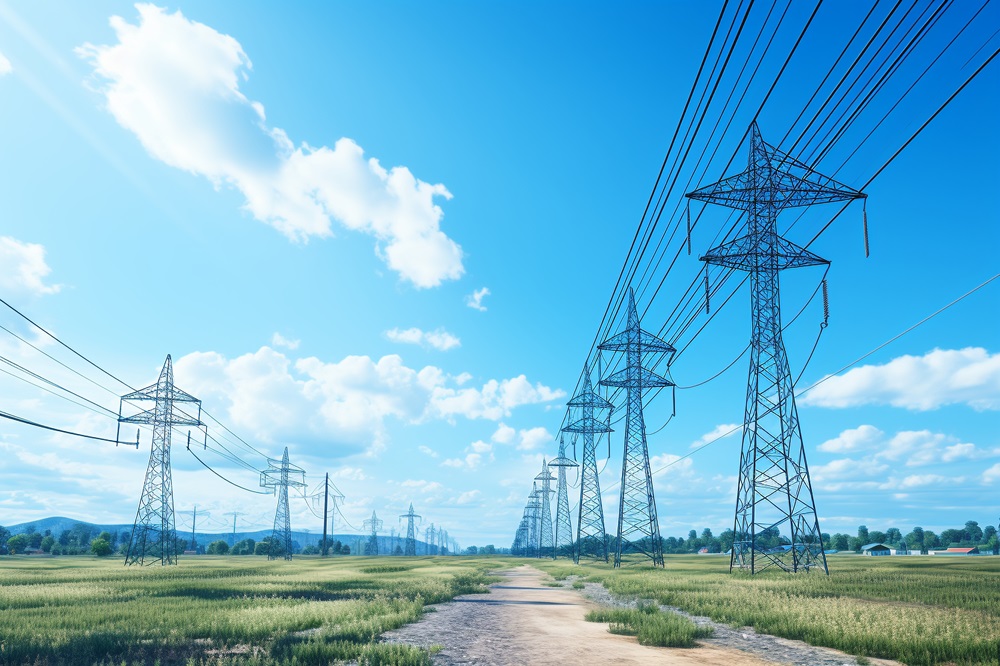
Seemingly brief voltage fluctuations can cause sustained and irreversible equipment damage. Minor power surges will continuously wear down the precision circuits inside the equipment, accelerate component aging, significantly shorten the service life of the equipment, and increase daily operation and maintenance costs; Frequent surge surges can interfere with the normal operation of communication, sensing, and precision control equipment, causing data disorder, signal abnormalities, and system lag; High intensity power surges can directly penetrate circuit chips, burn out equipment modules, cause equipment paralysis, and in severe cases, even trigger electrical safety accidents, directly threatening the stability and safety of production and operation. For modern electronic information equipment with high integration, low power consumption, and weak voltage resistance, the probability and degree of damage caused by power surges are much higher than those of traditional electrical equipment.
Due to the complex sources, hidden hazards, and strong persistence of power surges, electrical protection cannot rely on a single device or means. It is necessary to establish a comprehensive and systematic power surge protection system. The complete protection work first requires a risk assessment of the on-site electrical environment, equipment type, and line layout, accurately identifying the core protection objects, covering all vulnerable links such as power supply circuits, data transmission, and communication interfaces, eliminating loopholes in local and one-sided protection, and avoiding various risks caused by power surges from the source.
Many people have misconceptions: they believe that installing lightning rods, doing a good job in building grounding, laying down conductors and other external lightning protection measures can completely eliminate electrical hazards caused by lightning. In fact, the core function of traditional external lightning protection systems is to resist direct lightning strikes and prevent buildings and outdoor equipment from being directly damaged by lightning strikes. However, they cannot prevent the surge generated by lightning induction from propagating along the line and entering indoors, nor can they avoid the voltage impact caused by lightning secondary strikes. This is also the core reason why many buildings equipped with complete external lightning protection facilities still suffer from electronic equipment damage and system failures.
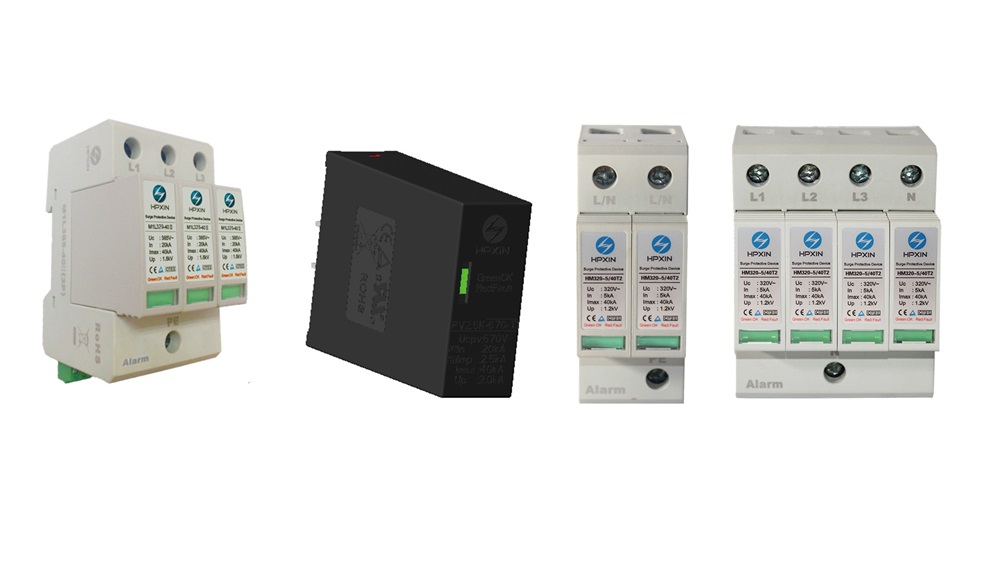
In this context, SPD surge protectors have become the core key equipment for internal protection of electrical systems, serving as the core barrier to compensate for the shortcomings of traditional lightning protection and resist various surge hazards. SPD is specifically designed for various transient overvoltages and currents, which can quickly respond to surge surges in power lines, timely discharge instantaneous abnormal currents, clamp line voltages, stabilize electrical circuit voltages within the safe operating range of equipment, effectively block the erosion and damage of surges to precision power, electronic, and communication equipment, and perfectly adapt to the protection needs of multiple scenarios such as data centers, building electrical, industrial equipment, and communication systems.
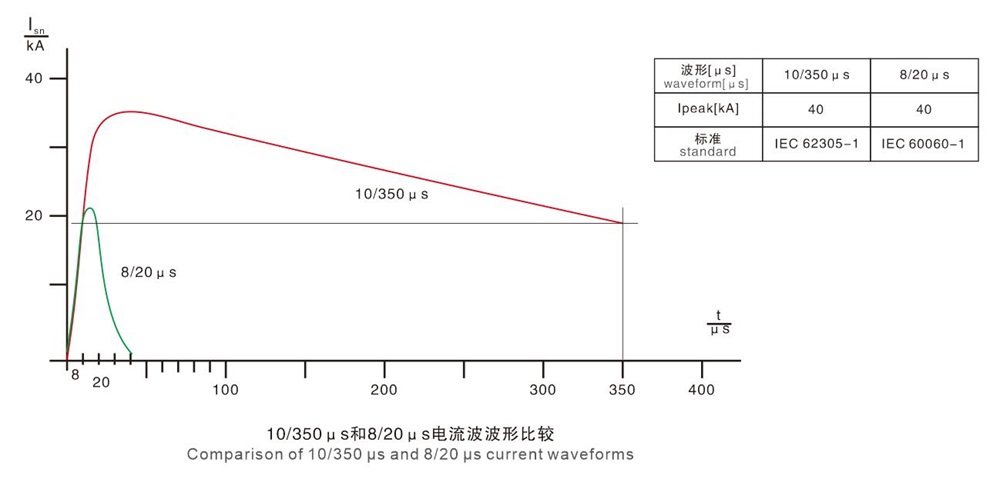
From the perspective of industry standards, there are clear differences in surge energy in different scenarios, and corresponding protection standards also vary. According to the IEC international electrical standard, the test waveform corresponding to direct lightning protection is 10/350 μ s, which has the characteristics of high peak value, large energy, and strong impact steepness. It is mainly suitable for high-intensity lightning surge protection scenarios; The most common types of induced lightning surges and equipment operation surges in daily life have relatively lower overall impact energy, and the industry uniformly uses an 8/20 μ s current waveform as the testing and judgment standard. Accurately distinguishing between two types of surge waveforms and energy differences is an important basis for scientifically selecting SPD equipment and building a graded protection system, as well as a core prerequisite for ensuring compliance and effectiveness of protection schemes.
In summary, modern electrical safety protection is a system engineering that combines internal and external factors and adapts to different levels. External lightning protection resists the risk of direct lightning strikes, while SPD internal protection intercepts various induced and operational surges. The two complement each other and are indispensable. Haipeng Xin has been deeply involved in the field of electrical protection for many years. Based on industry standards and practical experience in multiple scenarios, relying on mature technology systems and high-quality protective products, we provide professional and customized surge protection solutions for customers in various industries, comprehensively eliminating hidden voltage surge hazards and safeguarding the safe and stable operation of various electrical and intelligent equipment.


 Previous
 Back to list

-
 2018.06.09Haipeng Xin was rated as a good environmental protection enterprise
 -
 2017.11.24Haipengxin has been awarded the glorious title of \"Top 100 Small and Medium sized Enterprises in Shenzhen\'s Independent Innovation\" at the 5th session!
 -
 2015.01.29Data centers and China will be the keywords for the CeBIT event in 2015
-
Popular knowledge of lightning protection professional terms | Understanding the core terminology of lightning protection engineeringLightning disasters belong to high-risk natural disasters, and whether it is con...2026.07.24
-
Why does lightning protection require zoning protection? Analysis of differences in surge protection in different LPZ regionsIn lightning protection engineering for building electrical systems, data center...2026.07.22
-
Haipengxin has been awarded the glorious title of \"Top 100 Small and Medium sized Enterprises in Shenzhen\'s Independent Innovation\" at the 5th session!Haipengxin has been awarded the glorious title of "Top 100 Small and Medium size...2017.11.24