



 201
201
In lightning protection engineering for building electrical systems, data centers, and industrial intelligent systems, many people have a misconception that as long as lightning protection equipment is installed uniformly and grounding systems are laid out, comprehensive lightning protection can be achieved. However, in practical engineering applications, there are significant differences in the intensity of lightning electromagnetic pulses, lightning currents, and surge interference levels from outdoor outdoor areas to indoor precision equipment terminals. A unified and one size fits all lightning protection method can either prevent resource waste caused by overload protection or leave safety hazards due to insufficient protection. In response to this issue, the current authoritative lightning protection standard IEC 62305 and the corresponding domestic standard GB 50057-2010 "Code for Design of Lightning Protection of Buildings" uniformly adopt the LPZ lightning protection zoning system (the zoning concept originated from the abolished IEC 61312 standard, and the technical system has been fully iterated and used to this day), and achieve scientific, compliant, and accurate global lightning protection through the protection logic of graded zoning and gradient energy dissipation.
The core principle of LPZ zoning is to classify the protection space into levels by combining building lightning protection devices, shielding structures, and on-site environmental risks. The risk of direct lightning strikes, electromagnetic field strength, and surge energy in each zone gradually decrease. By matching shielding, equipotential, SPD surge protectors and other facilities at the zone interface, the electromagnetic pulse of lightning strikes is weakened layer by layer, and the stable operation of power and information equipment is comprehensively protected.
The conventional lightning protection zone of the project includes LPZ0A、 LPZ0B、 LPZ1, LPZ2, and subsequent multi-level fine protection zones have clear risk characteristics and protection standards, and clear division of labor.
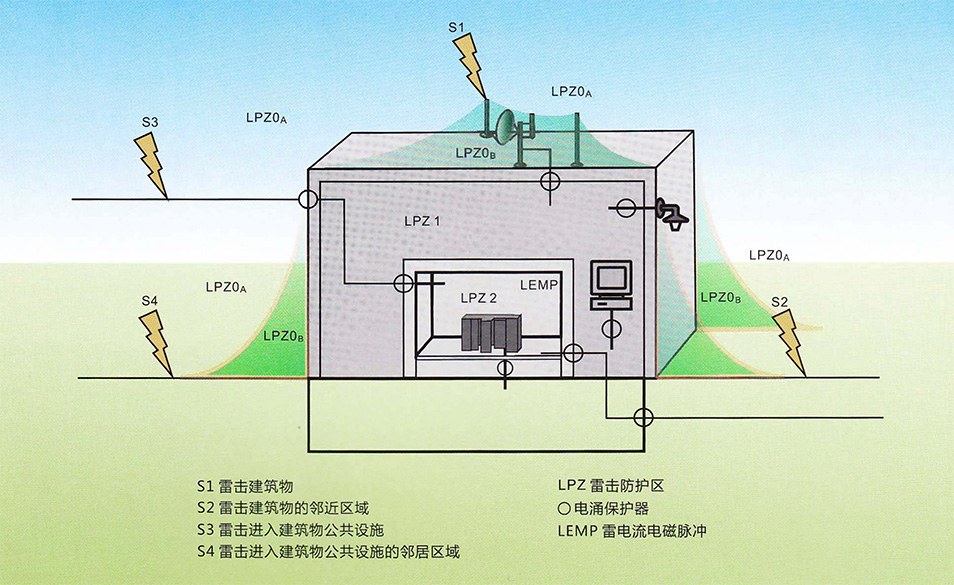
LPZ0AFor outdoor exposed high-risk areas, there are no electromagnetic shielding facilities, and lightning electromagnetic fields propagate freely without attenuation. There is a risk of direct lightning strikes in this area, which can withstand the impact of the original high-energy lightning current and is the first core protection interface of the lightning protection system.
LPZ0BIt also belongs to the outdoor unshielded area, but is completely within the protection range of the lightning arrester, which can completely avoid the harm of direct lightning strikes. However, due to the lack of electromagnetic shielding, lightning induced surges can invade equipment systems along the line, causing transient overvoltage and overcurrent hazards.
LPZ1 is an indoor core transition protection zone that is not affected by direct lightning strikes. By relying on building structure shielding and front-end lightning protection devices, the incoming lightning current from outdoors is greatly attenuated, and the electromagnetic interference of lightning is significantly reduced, effectively isolating the risk of high-energy lightning strikes outdoors and building a basic safety barrier for indoor equipment.
LPZ2 and subsequent zones are dedicated deep protection areas for precision equipment, suitable for low tolerance equipment scenarios such as weak current equipment and intelligent control systems in computer rooms. On the basis of LPZ1 protection, by optimizing wiring, strengthening shielding, and matching multi-level SPDs, residual surges and weak electromagnetic interference are thoroughly filtered to ensure stable operation of precision equipment.
The most important engineering value of the LPZ zoning system is to standardize the selection and installation logic of SPD grading, and strictly follow the professional protection principle of "step-by-step energy consumption and gradient voltage reduction".
LPZ0AThe interface with LPZ1 must face high-energy direct lightning current and must be equipped with a primary SPD. This type of equipment passes the 10/350 μ s high current waveform test and can quickly release the majority of direct lightning energy, introducing high-energy lightning current into the grounding system to complete the first round of high-intensity lightning protection.
LPZ0BThere is no direct lightning risk at the interface with LPZ1, only the threat of induced surge. According to the IEC 61643-1 standard, this interface does not require a primary lightning protection configuration and can use a secondary SPD with an 8/20 μ s waveform test or a combined waveform tertiary SPD to accurately eliminate transient overvoltage problems caused by induction.
LPZ1, LPZ2, and subsequent interfaces only have residual surges and weak electromagnetic induction after attenuation. Second and third stage SPDs can be selected according to the on-site working conditions to achieve fine voltage regulation, filter out interference, and ensure stable operation of weak current precision terminals.
Overall, LPZ zoning protection is a standardized scientific system for modern lightning protection engineering. Matching SPD devices with corresponding levels based on lightning risks in different zones can not only block lightning strikes and surge hazards layer by layer, eliminate blind spots in protection, but also optimize equipment configuration and control engineering costs, providing reliable and compliant global lightning safety protection for various electrical and information systems.


 Previous
 Back to list

-
 2018.06.09Haipeng Xin was rated as a good environmental protection enterprise
 -
 2017.11.24Haipengxin has been awarded the glorious title of \"Top 100 Small and Medium sized Enterprises in Shenzhen\'s Independent Innovation\" at the 5th session!
 -
 2015.01.29Data centers and China will be the keywords for the CeBIT event in 2015
-
Popular knowledge of lightning protection professional terms | Understanding the core terminology of lightning protection engineeringLightning disasters belong to high-risk natural disasters, and whether it is con...2026.07.24
-
Why does lightning protection require zoning protection? Analysis of differences in surge protection in different LPZ regionsIn lightning protection engineering for building electrical systems, data center...2026.07.22
-
Haipengxin has been awarded the glorious title of \"Top 100 Small and Medium sized Enterprises in Shenzhen\'s Independent Innovation\" at the 5th session!Haipengxin has been awarded the glorious title of "Top 100 Small and Medium size...2017.11.24